Is Paragliding Safe? Safety, Weather and Equipment Explained
It is the question everyone asks before a first flight. Here is, without beating around the bush, how safety works in tandem paragliding and why the weather decides everything.
Contents
- Where do the risks in paragliding come from?
- 1. The weather: the most important decision
- 2. The pilot: experience and training
- 3. The equipment: certified, checked and backed up
- 4. The passenger: a few simple instructions
- Questions to ask before you book
- Medical considerations
- What if the wind changes during the flight?
- So, should you be scared?
"Is it dangerous?" It is the question we are asked most often before a first flight, and a fair one. Here is an honest answer: like any air sport, paragliding involves risks, but on a tandem flight with professionals, those risks are identified and managed at every step. Let us explain.
Where do the risks in paragliding come from?
Paragliding accidents almost always have the same causes:
- Unsuitable weather: wind that is too strong, gusts, storms, turbulence.
- Pilot error, often linked to a lack of experience.
- Poorly maintained or poorly checked equipment.
Professional tandem flying addresses all three factors at once.
1. The weather: the most important decision
The golden rule of paragliding is simple: we only fly in good conditions. Before every flight, the pilot assesses:
- Wind strength: too light and you cannot stay up; too strong and flying is dangerous.
- Wind consistency: gusts are a reason to cancel.
- Wind direction: on the coast, it must blow in from the sea, facing the cliffs.
- The sky: rain, storms or poor visibility rule out flying.
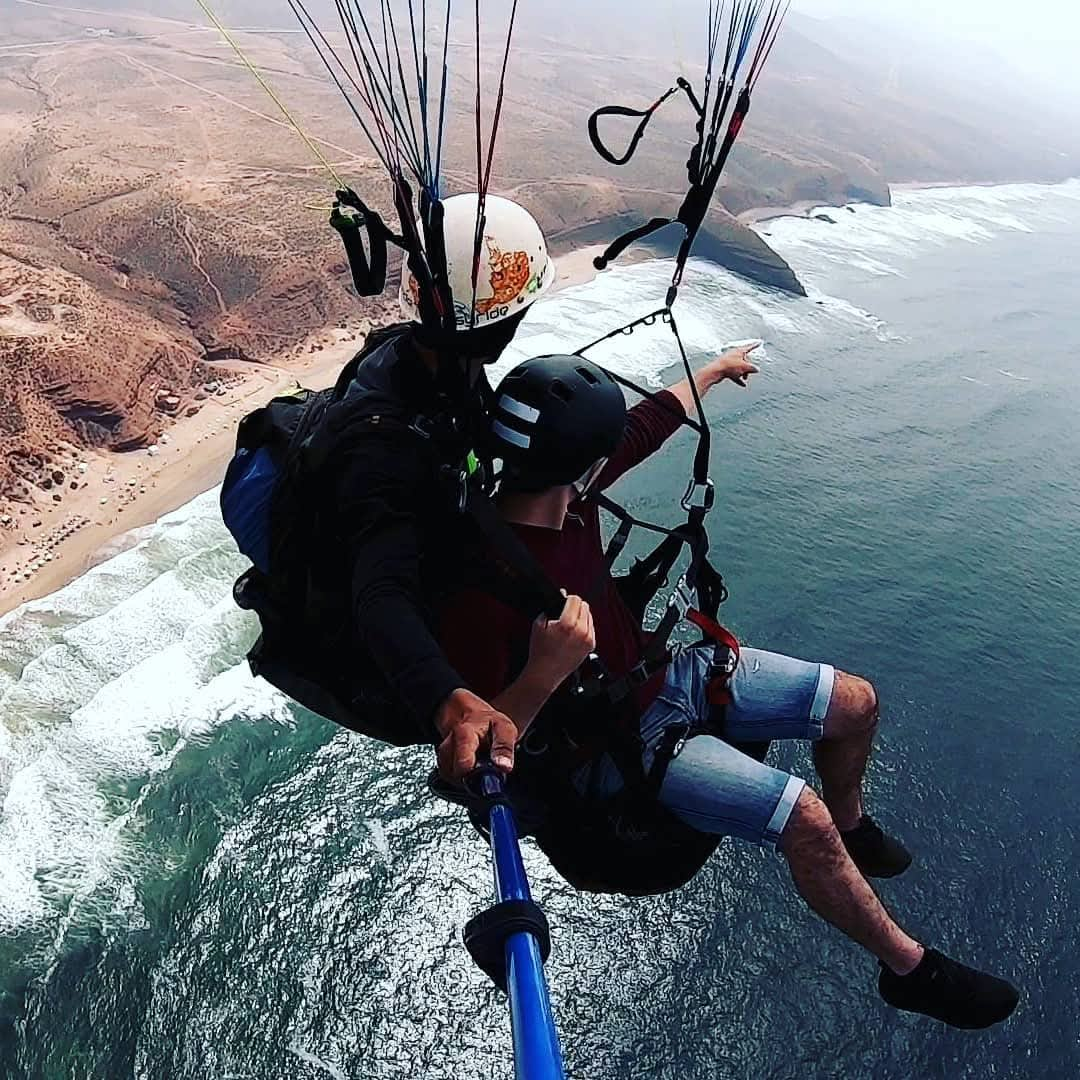
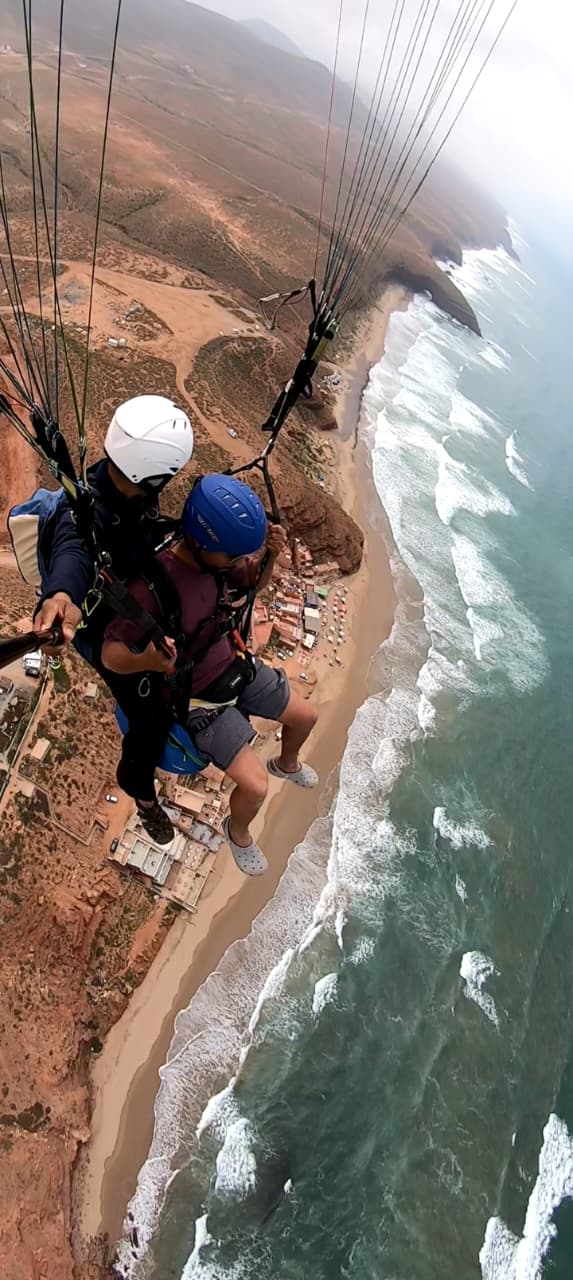
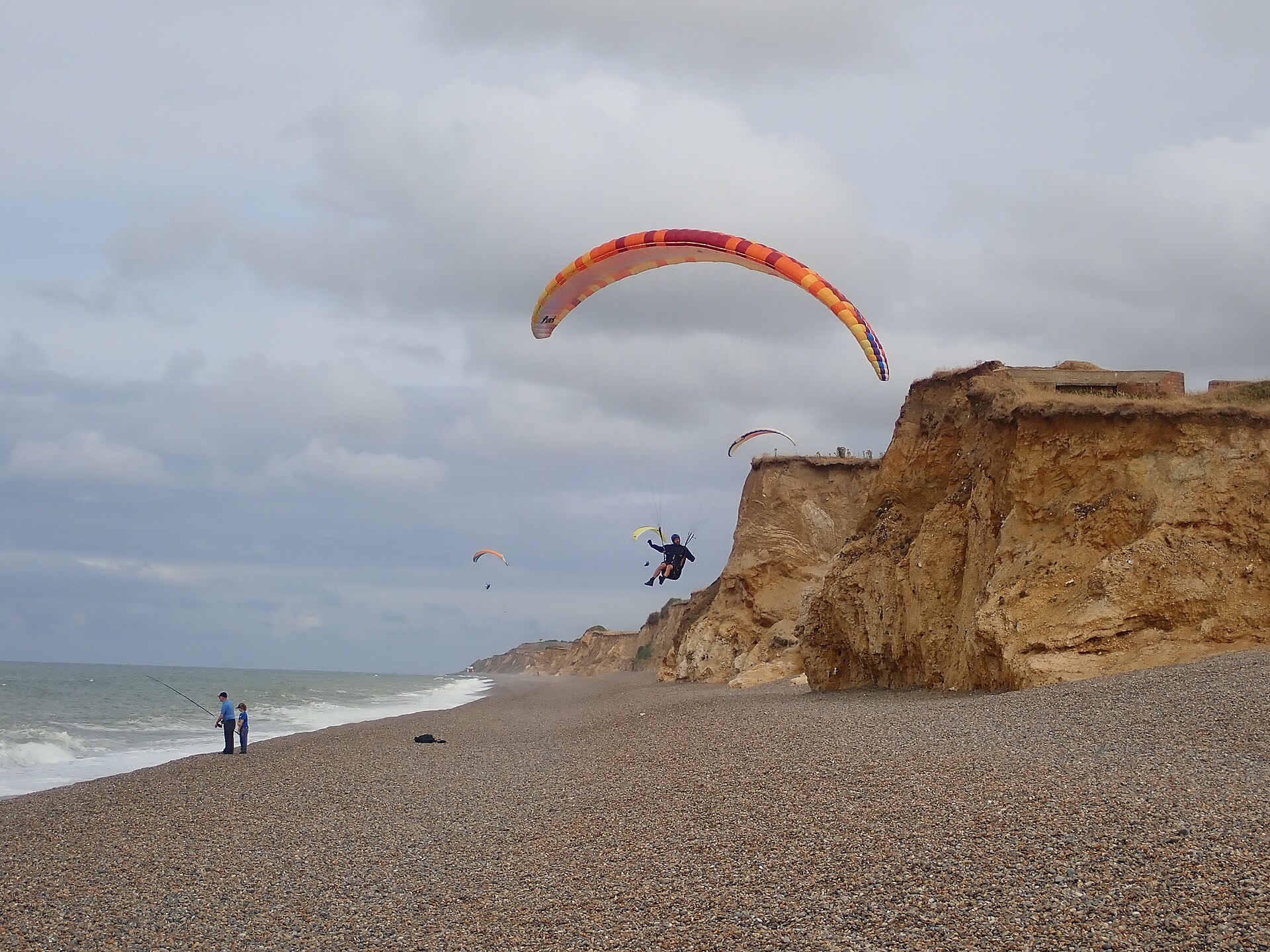
On the Aglou and Legzira coast, we practise ridge soaring in the sea breeze, a wind that is generally steady and smooth, far gentler than mountain thermals. When the conditions are not right, the flight is postponed, no discussion. That is why we recommend keeping a little flexibility in your plans (when to fly: our weather guide).
2. The pilot: experience and training
On a tandem flight you are not flying: a qualified pilot experienced in tandem flying handles the whole flight. They know the sites, the local winds and the landing areas inside out. Their job is also to brief you clearly and put you at ease.
Never hesitate to ask your pilot about their experience, their equipment or the weather on the day: a professional will be happy to answer.
3. The equipment: certified, checked and backed up
- The tandem wing is designed to carry two people and is checked before every flight.
- The harnesses of both pilot and passenger include back protection.
- The reserve parachute is carried on every flight.
- A helmet is provided for every passenger.
- The spreaders and karabiners connecting the two harnesses are checked at every take-off.
4. The passenger: a few simple instructions
Your role is simple, but it matters:
- Listen carefully to the briefing.
- At take-off, run with conviction until the pilot tells you to sit back.
- Stay seated and relaxed during the flight, and follow the landing instructions.
- Mention any medical condition (pregnancy, heart or back problems, recent surgery).
- Respect the weight limits (roughly 30 to 110 kg) and the minimum age (7, with parental consent).
Questions to ask before you book
A reputable operator will answer these questions without hesitation:
- Is the pilot qualified for tandem flying, and how long have they been flying this site?
- Is the equipment certified and recent, and is a reserve parachute carried?
- How is the decision to fly made based on the wind and weather?
- What happens if conditions are unfavourable: postponement, another site, another time slot?
- What are the age and weight limits, and why?
Medical considerations
Tandem paragliding is accessible to most people, but some situations call for medical advice beforehand, or for not flying at all:
- pregnancy;
- heart problems or uncontrolled high blood pressure;
- significant back problems or recent surgery;
- epilepsy;
- a recent ankle or knee injury (take-off and landing involve a few running steps).
If in doubt, talk to your doctor and let your pilot know when you book: together you will find the best solution.
What if the wind changes during the flight?
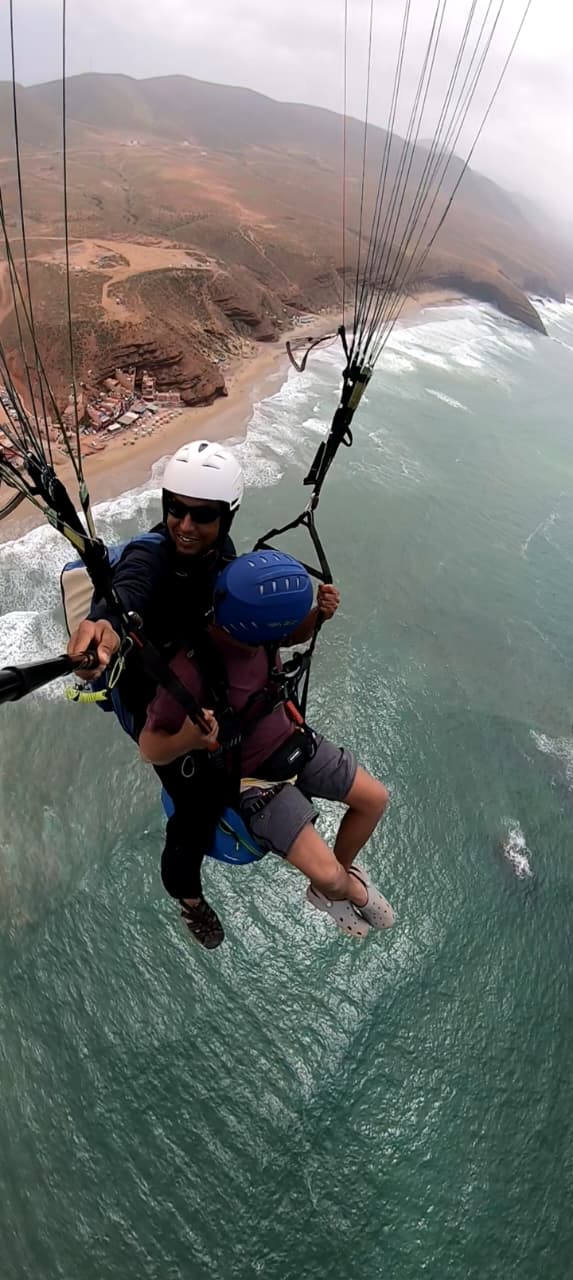
Pilots constantly monitor how conditions are evolving. If the wind strengthens or changes direction, the pilot simply shortens the flight and heads for the planned landing area, often the beach, which is wide and open. This is one of the reasons coastal flights are so popular: a safe landing is always within reach.
So, should you be scared?
It is natural to feel a little nervous before a first flight. But most of our passengers are surprised by how calm and smooth coastal flying is. Take-off takes a few steps, with no fall, and you land gently on the beach.
To know exactly what to expect, read what happens on a first tandem flight and our complete guide to paragliding in Morocco.
Our commitment: we only fly when conditions are good, with checked equipment and a reserve parachute on every flight. Book your flight with complete confidence.
Frequently asked questions
Is tandem paragliding safer than flying solo?
Commercial tandem flights are made by experienced pilots in carefully chosen conditions. The passenger does not have to make any technical decisions, which greatly limits the risks.
What happens if the wind is too strong?
The flight is postponed. Above a certain wind strength or in gusty conditions, no flights take place. We will offer you another time slot.
Is there a reserve parachute in paragliding?
Yes. Every tandem flight carries a reserve parachute, in addition to certified equipment checked before every take-off.