Your First Tandem Paragliding Flight: What Happens, How Long It Lasts and Our Tips
Briefing, take-off, sensations in the air, landing: here is a step-by-step look at your first tandem paragliding flight, with tips from our pilots.
Contents
- What is a tandem paragliding flight?
- Before the flight: booking and weather
- What happens, step by step
- 1. Welcome and briefing
- 2. Kitting up
- 3. Take-off
- 4. The flight
- 5. Landing
- What does it feel like?
- Our tips for a great first flight
- How much time should you allow in total?
- What if I'm scared?
- Flying with family or friends
- Who can fly?
- What about safety?
- Ready for take-off?
Your first paragliding flight is coming up, or you are still hesitating? Here is a step-by-step look at what happens on a first tandem paragliding flight on the Aglou and Legzira coast, what it feels like in the air, and our tips to make the most of it.
What is a tandem paragliding flight?
It is your very first paragliding flight, made in tandem with a professional pilot. You sit at the front in a comfortable harness, while the pilot behind you flies the wing. You need no experience and no particular fitness: you simply need to be able to take a few running steps at take-off.
Before the flight: booking and weather
Paragliding depends on the wind. After your booking, your pilot contacts you to set the most favourable time slot, often in the afternoon when the sea breeze is well established. The day before or on the day, they confirm the flight based on the forecast. If conditions are not right, the flight is postponed: this is a safety rule, never an inconvenience.
What happens, step by step
1. Welcome and briefing
Your pilot welcomes you at the take-off site, shows you the equipment and explains the instructions. The briefing is simple and reassuring: how to stand, when to run, how to sit back in the harness once airborne and how to land.
2. Kitting up
You put on the harness and the helmet. The pilot adjusts the straps, checks every buckle and connects your harness to theirs. Everything is checked before take-off.
3. Take-off
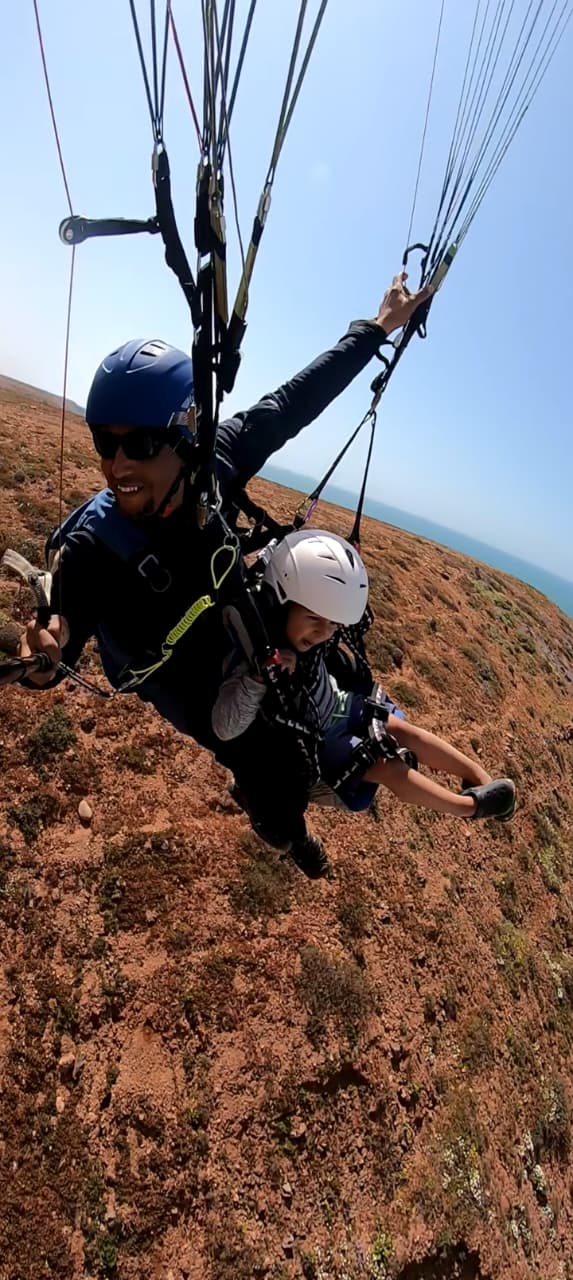
Facing the slope, the pilot inflates the wing above you. On their signal, you take a few running steps… and your feet gently leave the ground. No falling, no jumping: the wing lifts you up progressively.
4. The flight
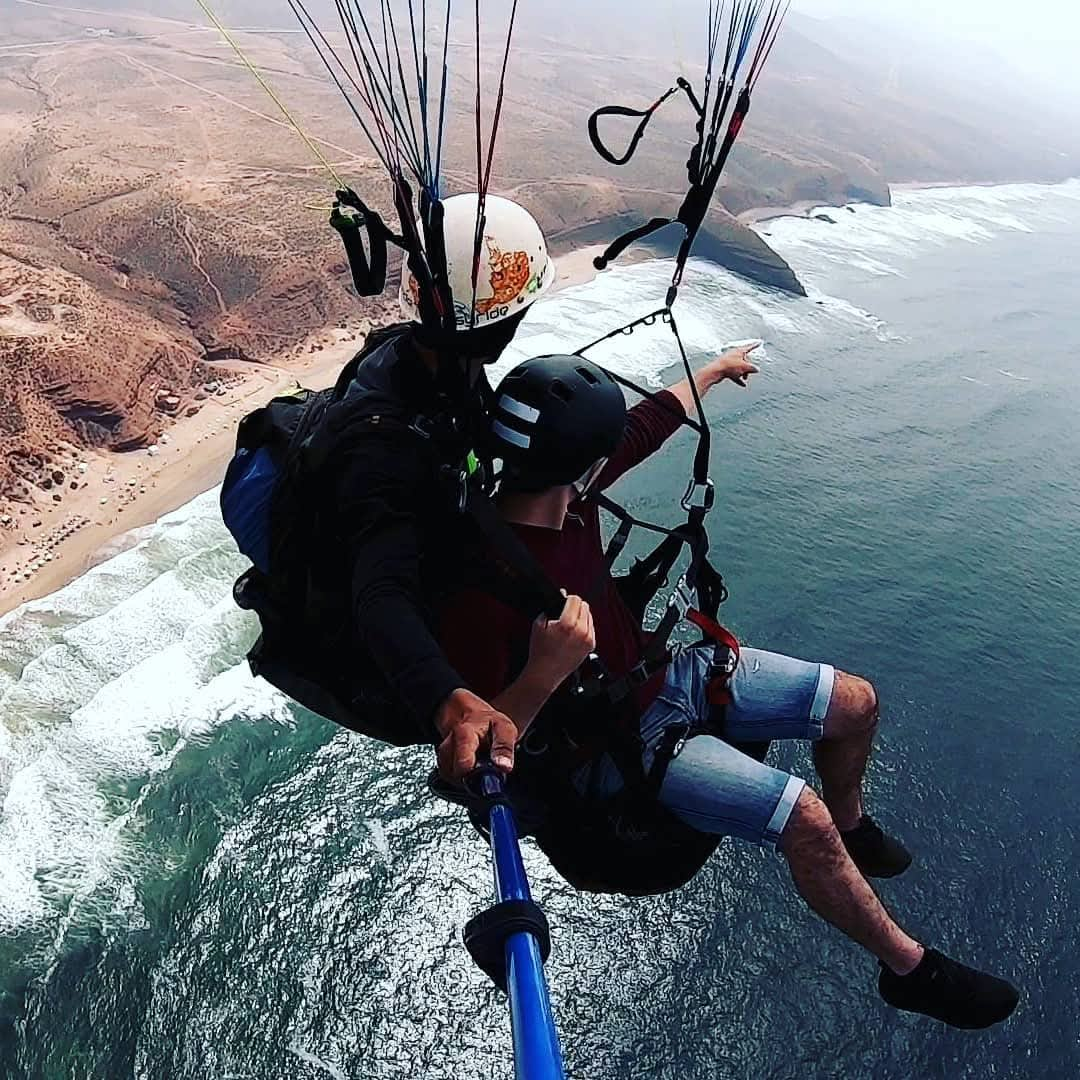
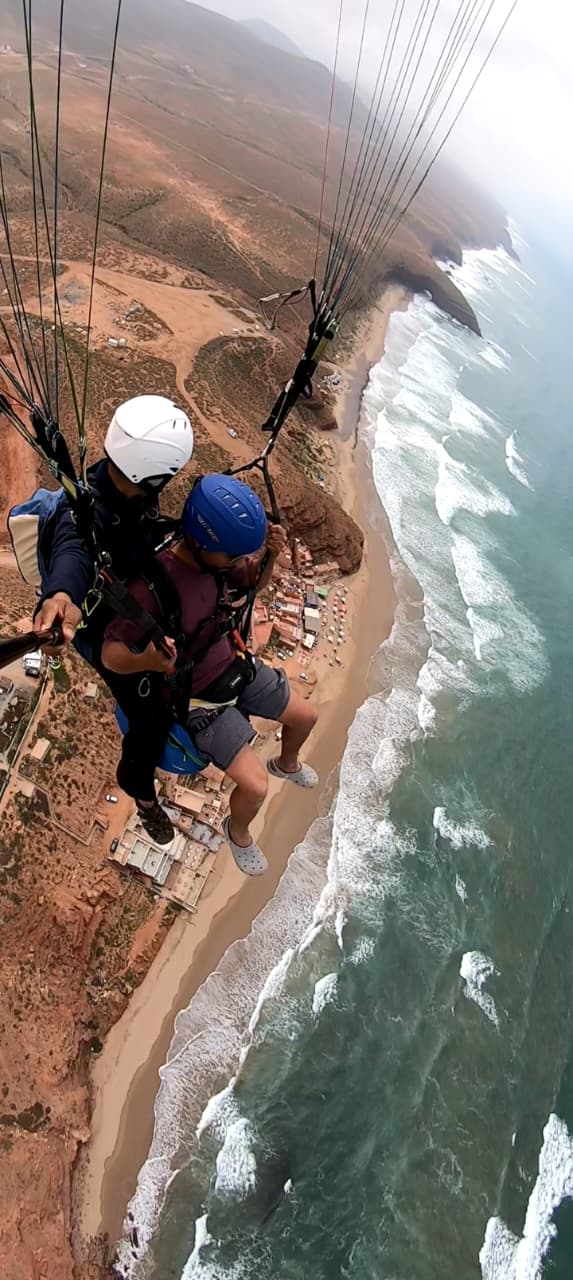
Once airborne, you sit back comfortably in the harness. The silence, the light breeze, the ocean beneath your feet: this is the moment to enjoy. The pilot flies along the cliffs, tells you about the landscape and, if conditions allow, may let you take the controls for a moment. The flight lasts 10 to 25 minutes depending on the weather and the package.
5. Landing
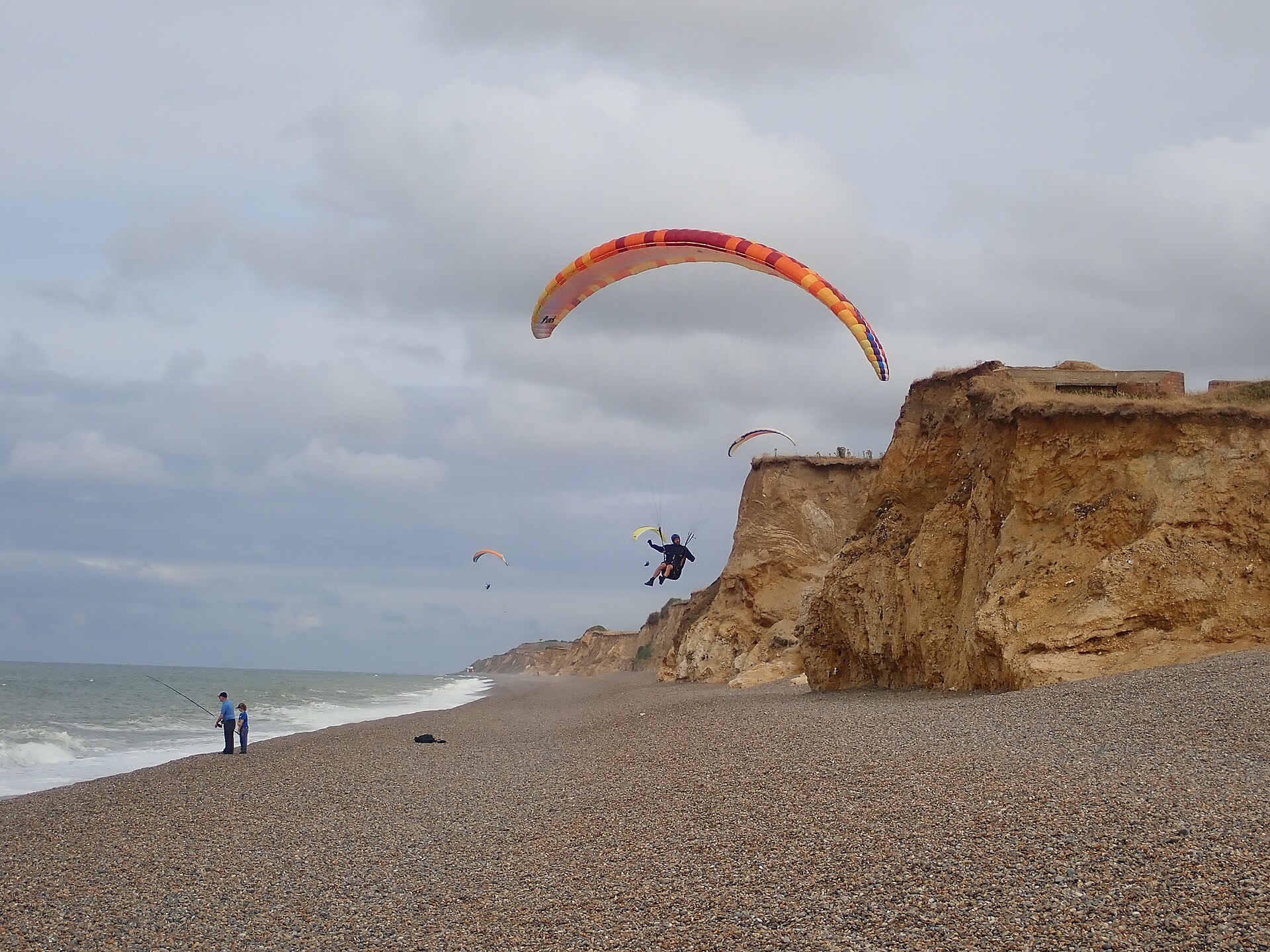
The pilot prepares the approach and tells you when to sit up. You land gently, often on the beach, taking a few steps or in a seated position.
What does it feel like?
Most of our passengers are surprised by how smooth the flight is. On the coast, the air carried by the sea breeze is generally steady: you glide rather than bump around. The feeling of freedom is immense, and even people who suffer from vertigo often feel fine, because there is no visual reference to the ground like at the edge of a drop.
Fancy a bit more of a thrill? Just ask your pilot: depending on conditions, they can add a few more dynamic turns, always adapted to how you feel.
Our tips for a great first flight
- Wear closed shoes and comfortable clothes (our full checklist).
- Eat lightly before the flight, but don't fly on an empty stomach.
- Listen to the briefing and ask all the questions you like.
- Stay relaxed at take-off: run with conviction until the pilot tells you to sit back.
- Tell your pilot if you are prone to motion sickness.
- Consider the photo and video option to remember your flight.
How much time should you allow in total?
The flight itself lasts 10 to 25 minutes, but allow around an hour on site: welcome, briefing, kitting up, possibly waiting for the right wind, the flight and getting back. If you come as a group, passengers usually fly in turn: allow a little more time and use it to film your friends' take-offs.
What if I'm scared?
That is perfectly normal, and very common! Simply tell your pilot: they will take the time to explain every step and adapt the flight to how you feel. The take-off is gentle, with no jump or fall, and coastal flights are generally very calm. Many passengers who are anxious on the ground are the first to want to fly again once they have landed.
Flying with family or friends
A first flight is an experience to share: children from 7 years old with parental consent, couples, groups of friends… Mention the number of passengers in your booking request so we can organise the flights. And consider the photo and video option: it is the perfect keepsake to watch together the same evening.
Who can fly?
Flights are possible from the age of 7 with parental consent, for a weight of roughly 30 to 110 kg. Pregnant women and anyone with significant health issues (heart, back, recent surgery) should seek medical advice first.
What about safety?
Flights are made by experienced tandem pilots, with certified equipment, a reserve parachute and strict weather decisions. To understand everything, read is paragliding safe?.
Ready for take-off?
For the big picture, read the complete guide to paragliding in Morocco, then book your first flight online: we will get back to you quickly to set the best time slot.
Frequently asked questions
How long does a first paragliding flight last?
The flight usually lasts 10 to 25 minutes depending on the weather and the package. With the welcome, briefing and preparation, allow about an hour on site.
Will I feel vertigo when paragliding?
Rarely. Without any contact with the ground, the sense of height is very different from standing at the edge of a balcony. Most passengers who suffer from vertigo feel fine in the air.
Can I get airsick when paragliding?
Coastal flights are generally very smooth. If you are sensitive, let your pilot know: they will adapt their flying and avoid tight turns.