Afraid of Heights? Why You Can Still Go Paragliding
Vertigo, fear of heights, fear of strong sensations: why paragliding surprises so many anxious people, and how we help them enjoy a calm first flight.
Contents
- Vertigo, fear of heights, fear of sensations: what are we talking about?
- Why vertigo is rare in a paraglider
- Take-off: no jump, no fall
- The flight: gentle and at your own pace
- Our tips for a calm first flight
- Mention it when you book
- Choose the right moment
- Breathe and look at the horizon
- Talk to your pilot
- Watch a flight before yours
- When is it better not to fly?
- Safety, your best ally against fear
- In short
"I would love to fly, but I am afraid of heights." It is one of the things we hear most often on the phone. And yet many of these people leave the beach with a huge smile, surprised at how little they felt what they had been dreading. Is paragliding with a fear of heights really possible? In most cases, yes. Here is why, and how we look after our most anxious passengers.
Vertigo, fear of heights, fear of sensations: what are we talking about?
These three fears are related but feel quite different:
- Vertigo is a physical sensation of imbalance, often triggered by the sight of a nearby drop: the edge of a roof, a footbridge, a ladder.
- Fear of heights is more of a mental apprehension: the idea of falling, of having no ground beneath your feet.
- Fear of strong sensations is more about the stomach: dreading fast ups and downs, like on a fairground ride.
The good news is that tandem paragliding, as we practise it for a first flight, triggers almost none of these three fears.
Why vertigo is rare in a paraglider
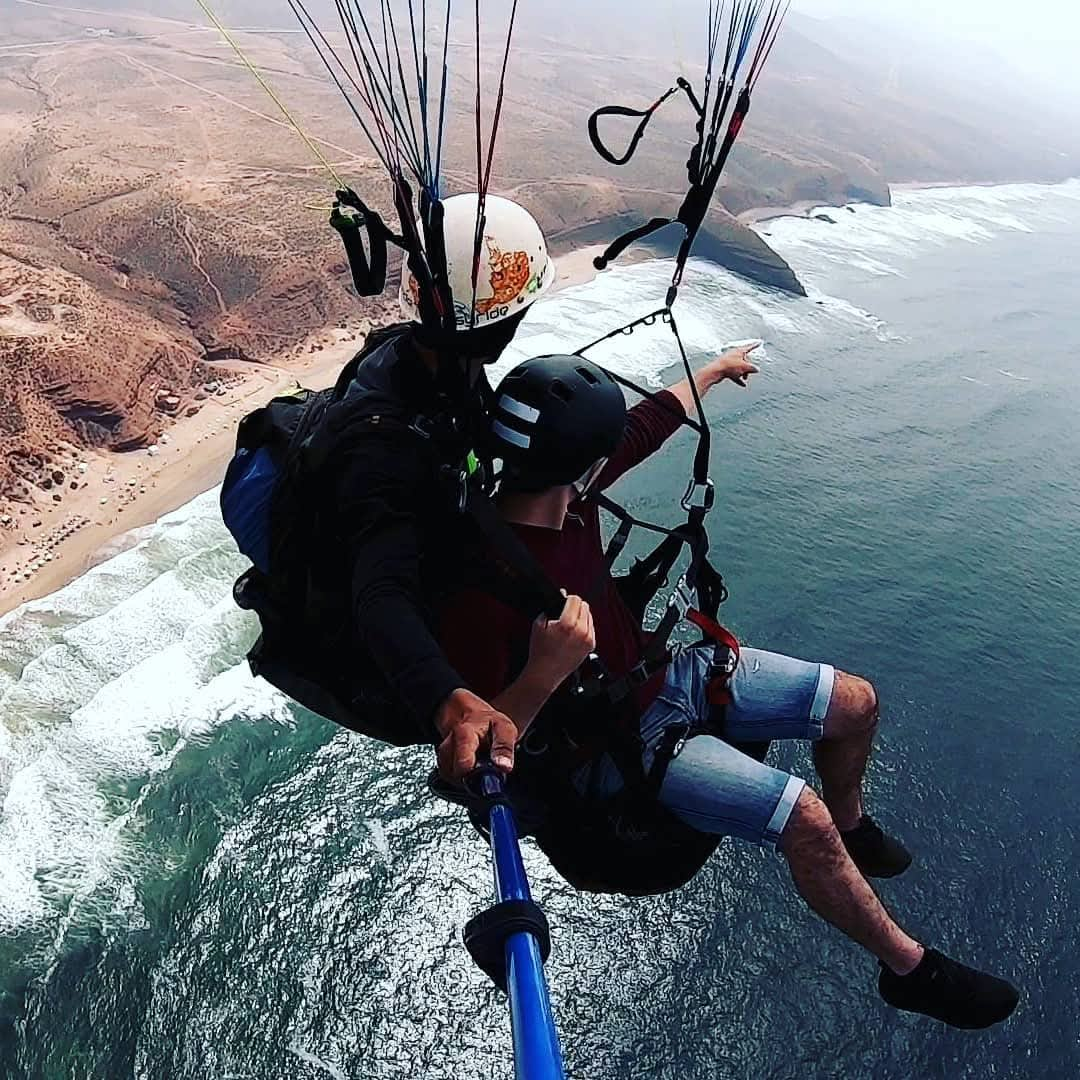
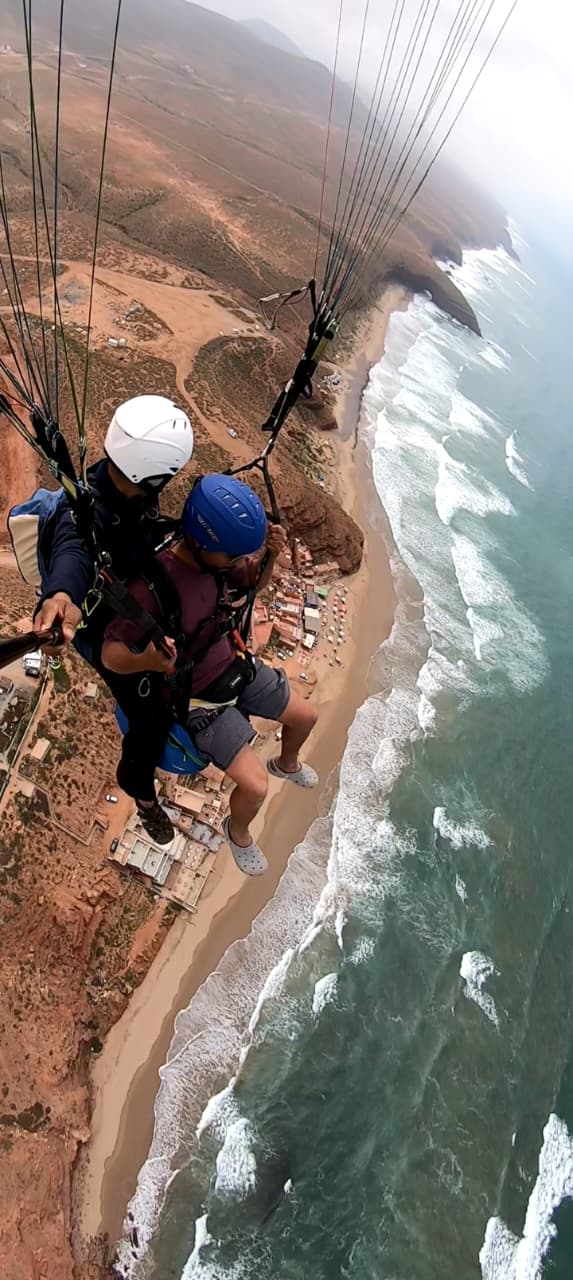
Vertigo comes from a conflict between what the eyes see and what the body feels, especially when a vertical reference close by, a railing or a wall, emphasises the height. In flight, that reference disappears. You are sitting in a comfortable harness, with no contact with the ground or a wall, and the landscape stretches as far as the eye can see. Your brain no longer perceives height as an immediate threat: it experiences it as a panorama.
It is the same reason why many people prone to vertigo are perfectly comfortable looking out of an aeroplane window, while a fifth-floor balcony makes them uneasy.
Take-off: no jump, no fall
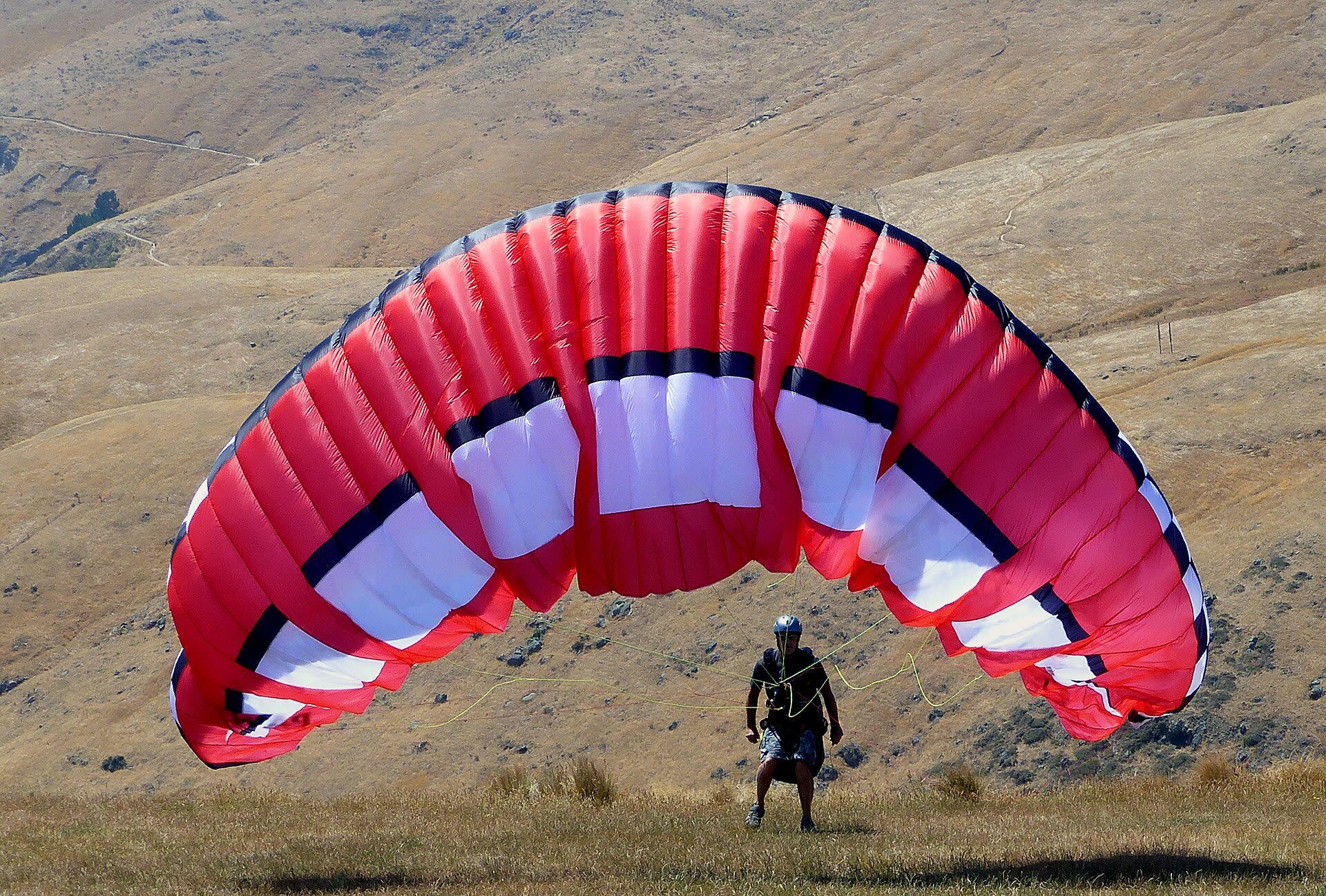
The image of a paraglider leaping into the void is misleading. On our coastal sites, the pilot inflates the wing facing the wind; you take a few steps, sometimes a short run, and it is the wing that lifts you gradually. You never jump, and there is no free-fall at any point. The transition from ground to air is so smooth that many passengers only realise they are flying when their feet are no longer touching anything.
To discover every step in detail, read our article on your first tandem paragliding flight.
The flight: gentle and at your own pace
A first paragliding flight is nothing like a fairground ride. The pilot follows the cliffs using the lift, with wide, progressive turns. Aerobatic manoeuvres are only done on request, and never with an anxious passenger.
Above all, you stay in control: at any time, you can ask for a calmer flight, a path further from the cliffs or an early landing. Your pilot is listening throughout the flight, sitting just behind you, and you can talk to each other normally.
Our tips for a calm first flight
Mention it when you book
Mention your apprehension in the message of your booking request. Your pilot will take a little more time over the briefing and, where possible, choose a slot when the breeze is particularly steady.
Choose the right moment
The late afternoon often offers the smoothest air of the day. The sunset flight is in fact a favourite among anxious passengers: the light is calming and the beach is quieter.
Breathe and look at the horizon
During the first few seconds, breathe slowly from your stomach and rest your gaze far away, on the ocean. Fixing your eyes on the horizon steadies your senses, just as it does on a boat.
Talk to your pilot
Describing what you see, asking questions, laughing: talking helps you relax. Our pilots know these moments well and know how to reassure with a few words.
Watch a flight before yours
If you come as a group, let someone else fly first. Seeing another person take off and land calmly is often the turning point.
When is it better not to fly?
Paragliding is not advisable if your apprehension turns into a real panic attack, or if you have a medical reason not to fly: heart problems, epilepsy, pregnancy or serious back problems. If in doubt, ask your doctor. And remember: deciding not to fly on the day is not a failure. A pilot will never take off with someone who does not want to.
Safety, your best ally against fear
Understanding what makes the activity safe helps a great deal: a qualified pilot, certified equipment checked before every flight, a reserve parachute, a systematic briefing and a decision to fly based solely on the weather. Our article is paragliding safe? answers all these questions in detail.
In short
- Most people prone to vertigo feel little or none of it in flight.
- You take off by walking: no jump, no fall.
- The flight is gentle, and you can ask for it to be calmer or shorter at any time.
- Mention your apprehension when you book and your pilot will adapt everything.
What if this time, you dared? Send us your request and mention your apprehension: we will call you back to talk about it before we even set a date.
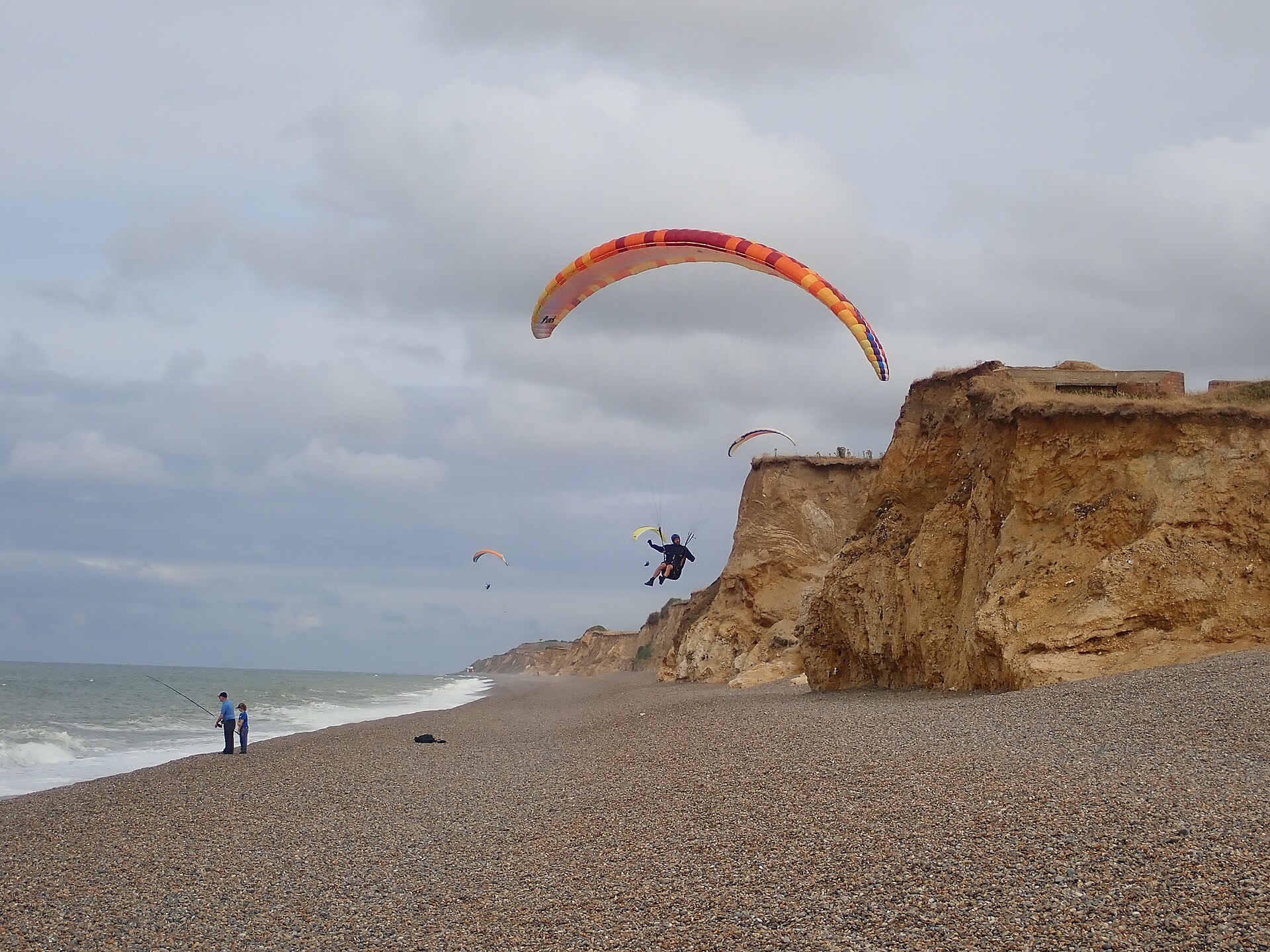
Cover photo: Paragliders, Weybourne beach - geograph.org.uk - 7485454.jpg by Eirian Evans, CC BY-SA 2.0, via Wikimedia Commons.
Frequently asked questions
Do you feel vertigo when paragliding?
Very rarely. Vertigo is mostly triggered by a nearby vertical reference, such as the edge of a balcony. In flight, with no visual link to the ground, most people prone to vertigo do not feel it.
Do you have to jump off the cliff to take off?
No. The pilot inflates the wing facing the wind, you take a few steps and the wing gradually lifts you up. There is no jump and no fall.
Can I ask for a very gentle flight?
Yes. Tell your pilot: they will adapt the flight with no steep turns and can shorten it at any time if you wish.