Paragliding Photos and Videos: How to Keep an Unforgettable Memory of Your Flight
Pole camera, clothing, light, gestures, sharing: everything you need to know to come home with stunning photos and videos of your paragliding flight.
Contents
- Why choose the photo and video option?
- How is the flight filmed?
- An action camera on a pole
- From take-off to landing
- Your hands stay free
- Should you bring your phone?
- Tips to look great in the air
- Which light gives the best images?
- Afternoon, for colour
- Sunset, for emotion
- After the flight: sharing your images
- Respect and privacy
- In short
A paragliding flight lasts 10 to 25 minutes, but the images last forever. Taking off facing the ocean, the cliffs passing beneath your feet, your face as the wing lifts you up: these are moments you want to watch again and share. Here is how paragliding photos and videos are made on our tandem flights, and our pilots' tips for memories that are truly worth keeping.
Why choose the photo and video option?
In the air, the emotion is so intense that your memory mostly keeps sensations: the wind, the light, the silence. Details fade quickly. A video lets you relive the experience, show your loved ones what you saw and often discover things you had not noticed at the time: a wave crashing against the cliff, fishermen on the rocks, your own burst of laughter at take-off.
It is also an excellent way to convince a hesitant friend: nothing is more reassuring than seeing how peaceful a flight really is.
How is the flight filmed?
An action camera on a pole
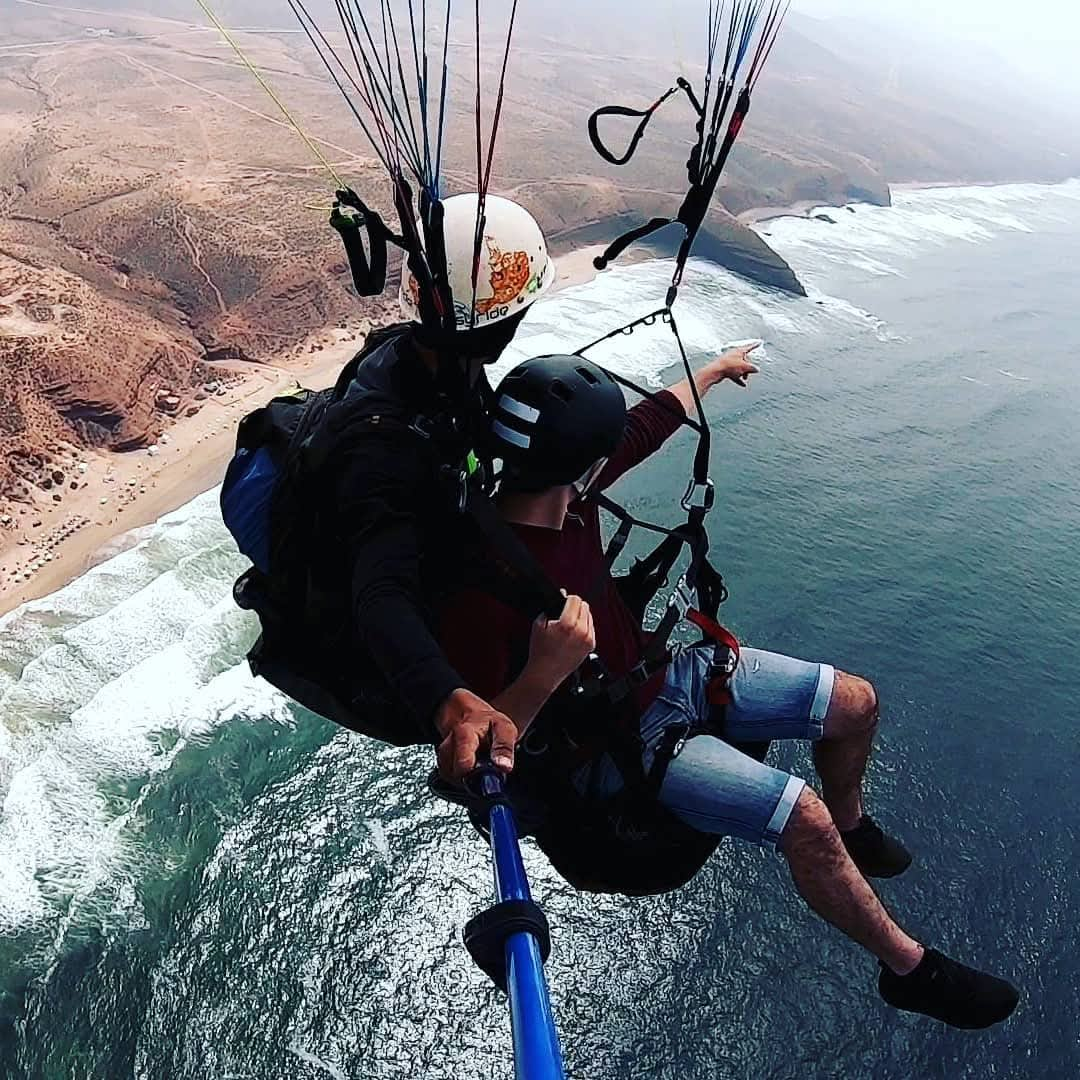
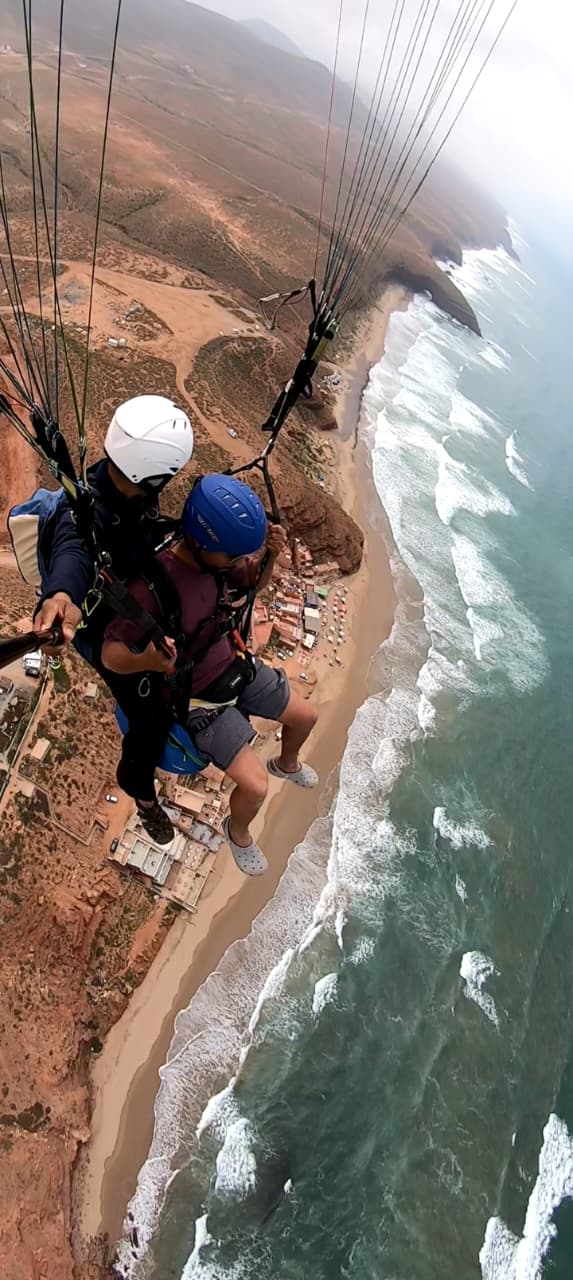
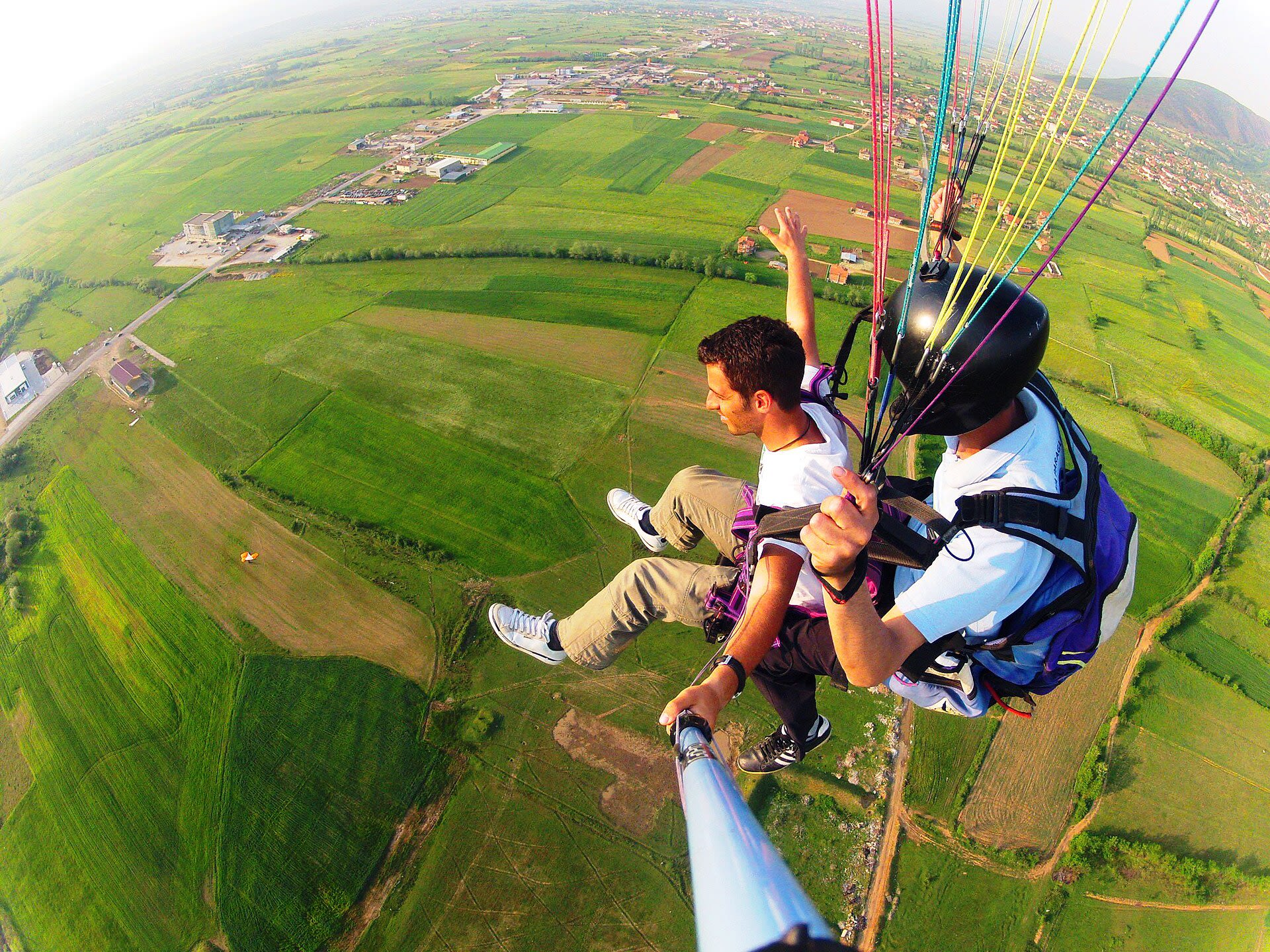
The pilot uses a wide-angle action camera fixed to the end of a lightweight pole. This set-up frames the passenger, the pilot and the landscape together, from a slightly raised angle, which is the most flattering. The pilot moves the pole throughout the flight to vary the shots: from the front at take-off, from the side along the cliffs, looking down towards the beach.
From take-off to landing
The camera starts rolling during the preparation, so you get the briefing, the take-off run, the first moments in the air, the flight and the landing. Photos are taken in bursts or extracted from the best moments of the video.
Your hands stay free
That is the whole point of the option: you have nothing to hold and nothing to set up. You enjoy the flight fully while the pilot takes care of the images.
Should you bring your phone?
Our advice is simple: leave it on the ground, or keep it in a zipped pocket. A phone that slips out of your hands in flight is gone for good and could hurt someone below. If you really want to film yourself, discuss it with your pilot before take-off: only a device securely attached with a strap can be considered.
Tips to look great in the air
- Tie your hair back and avoid scarves that flap in front of your face.
- Wear bright colours: a red, orange or yellow top stands out beautifully against the blue ocean and the ochre cliffs.
- Secure your sunglasses with a strap, or take them off for a few shots so people can see your eyes.
- Look at the camera now and then, then at the landscape: alternating makes lively videos.
- Express yourself: smiles, gestures, comments... Videos where you can hear the passenger's joy are always the best.
- Open your arms when the pilot suggests it, in stable flight: it is the iconic paragliding shot.
For the rest of your outfit, follow our what to wear for paragliding checklist.
Which light gives the best images?
Afternoon, for colour
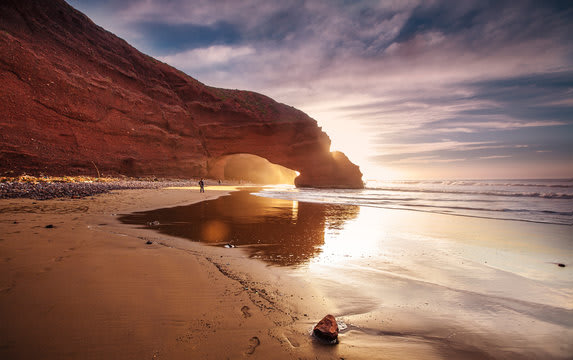
In the middle of the afternoon, the light reveals the full palette of the coast: the turquoise ocean, the white foam, the deep red cliffs of Legzira. It is the ideal time for sharp, vivid images, especially above the Legzira arches.
Sunset, for emotion
At the end of the day, the golden light softens faces and sets the landscape ablaze. Backlit shots over the ocean look truly cinematic. Find out why the sunset flight is a favourite among photography lovers.
After the flight: sharing your images
The files are sent after the flight, usually the same day. Make sure you have enough storage space on your phone, as high-definition videos are large. For social media, a 15- to 30-second clip of the take-off or a stretch along the cliffs is enough to make an impression.
For a more polished result, choose three or four strong sequences: the take-off run, the first turn above the ocean, a pass along the cliffs and the landing on the sand. Add some gentle music and cut the more repetitive moments: in under a minute, you have a short film that perfectly captures the emotion of the flight.
If you post your images, feel free to tag us: we love seeing our passengers share their experience. And if you would like a more elaborate edit, keep the original files, which are better quality than the compressed versions sent through messaging apps.
Respect and privacy
Our pilots only film their passengers and the landscape. Images are never published without your consent: if you agree to let us share a clip, it will always be after asking you.
In short
- The pilot films with a wide-angle camera on a pole, so your hands stay free.
- Leave your phone on the ground or in a zipped pocket.
- Bright colours, tied-back hair, sunglasses on a strap and plenty of smiles: the winning combination.
- Afternoon for colour, sunset for emotion.
Would you like to come home with your own footage? Add the photo and video option when you book, or discover all our packages on the our flights page.
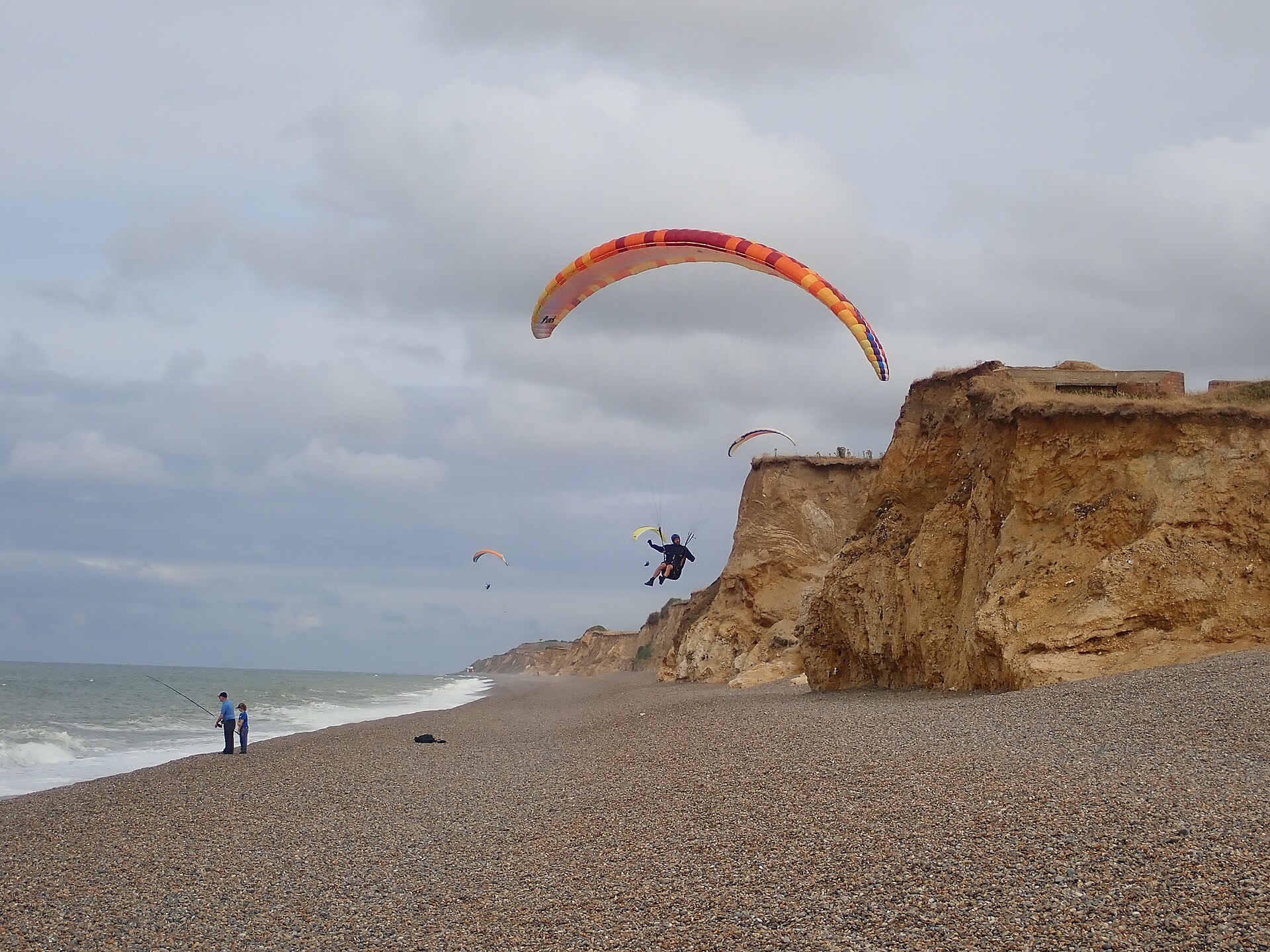
Cover photo: I want to fly like an eagle - Tandem Flights.JPG by Nentor oseku, CC BY-SA 3.0, via Wikimedia Commons.
Frequently asked questions
How is a tandem paragliding flight filmed?
The pilot uses a wide-angle action camera mounted on the end of a pole. It films the take-off, the flight and the landing, framing both the passenger and the landscape.
Can I film with my own phone?
It is not recommended: a phone dropped in flight is lost and could be dangerous for people below. Only a securely attached device can be considered, with the pilot's agreement.
When do you receive the photos and videos?
The files are sent after the flight, usually the same day. Ask your pilot which transfer method is most convenient for you.