Paragliding Weather in Morocco: Understanding the Sea Breeze That Makes the Atlantic Coast Flyable
Why do we mostly fly in the afternoon? When is a flight postponed? The sea breeze, ridge soaring and the moods of the Atlantic sky explained simply.
Contents
- Why the weather is decisive in paragliding
- The sea breeze explained simply
- A question of temperature difference
- Reinforcement from the north
- Ridge soaring
- The ideal wind for flying
- When don't we fly?
- The weather through the seasons
- Spring and summer
- Autumn and winter
- How the pilot makes the decision
- Our tips as a passenger
In paragliding, it is neither the pilot nor the passenger who decides when to fly: it is the sky. On Morocco's Atlantic coast, between Aglou and Legzira, one phenomenon in particular makes flying possible and wonderfully smooth: the sea breeze. Understanding how it works means understanding why your pilot suggests one time slot rather than another, and why a postponement is never bad news. Here is paragliding weather explained simply.
Why the weather is decisive in paragliding
A paraglider is an aircraft with no engine: it glides thanks to its wing and can only stay airborne if it finds rising air. On the coast, this rising air is created by the wind blowing against the cliffs. The quality of a flight therefore depends entirely on the direction, strength and regularity of that wind. That is why the decision to fly always rests with the pilot, at the last moment, on site.
The sea breeze explained simply
A question of temperature difference
During the day, the sun heats the land much faster than the ocean. The air over the land warms up, becomes lighter and rises. To replace it, the cooler air above the sea moves inland: that is the sea breeze.
It builds up gradually from late morning, strengthens during the afternoon and fades around sunset, when the land cools down. In the evening and at night, the phenomenon can even reverse: this is the land breeze, which blows out to sea.
Reinforcement from the north
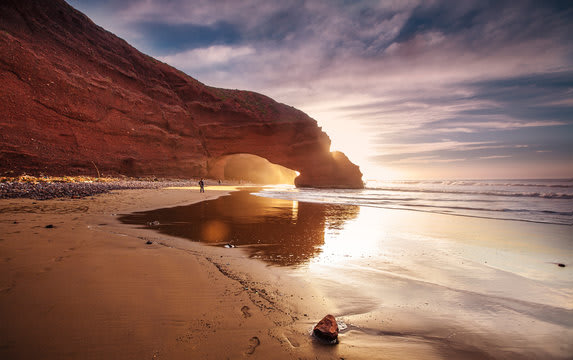
On the Souss coast, the sea breeze often combines with the north to north-westerly flow that sweeps Morocco's Atlantic seaboard, especially in spring and summer. Together they produce a steady wind from the ocean, perfectly aligned with the cliffs of Aglou, Mirleft and Legzira.
Ridge soaring
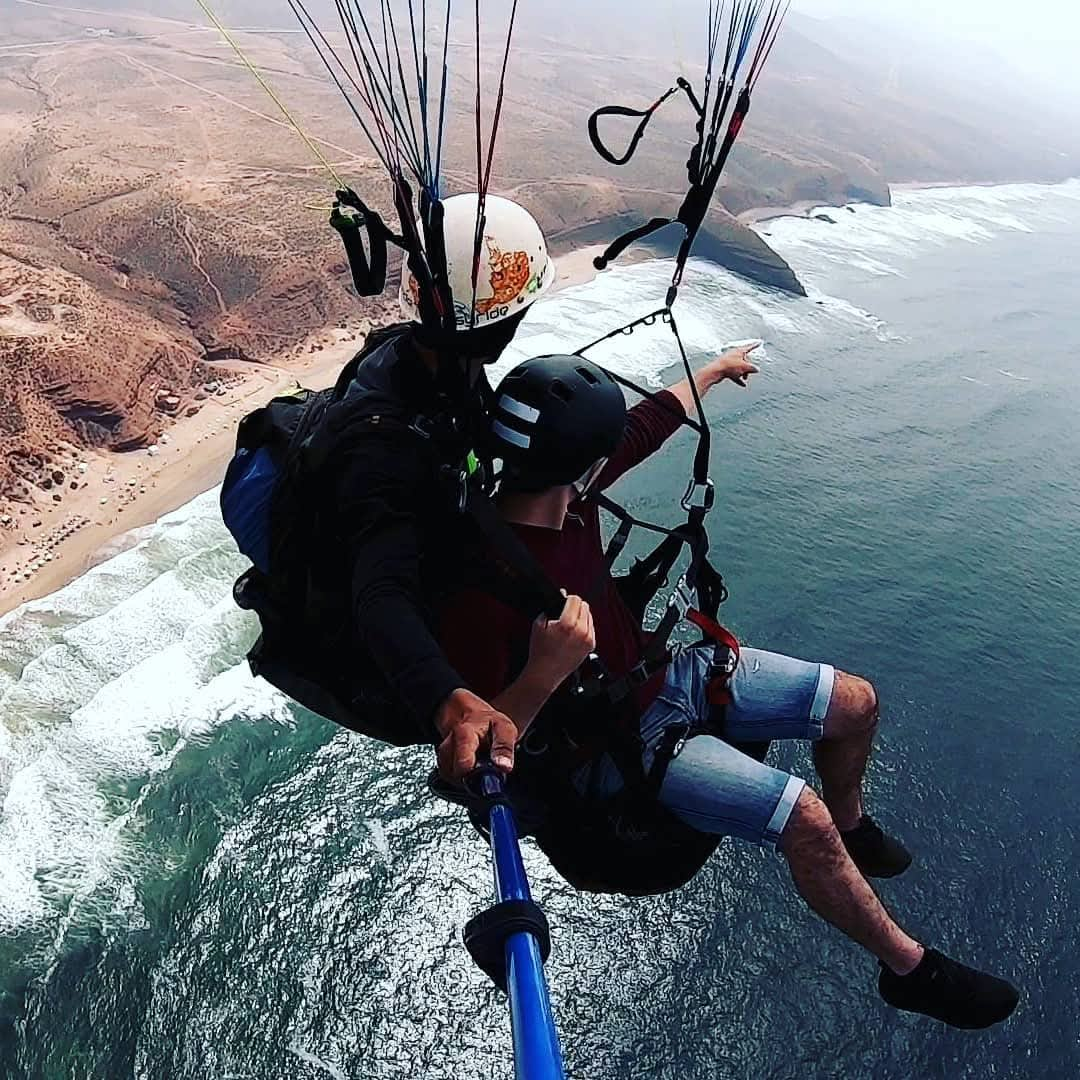
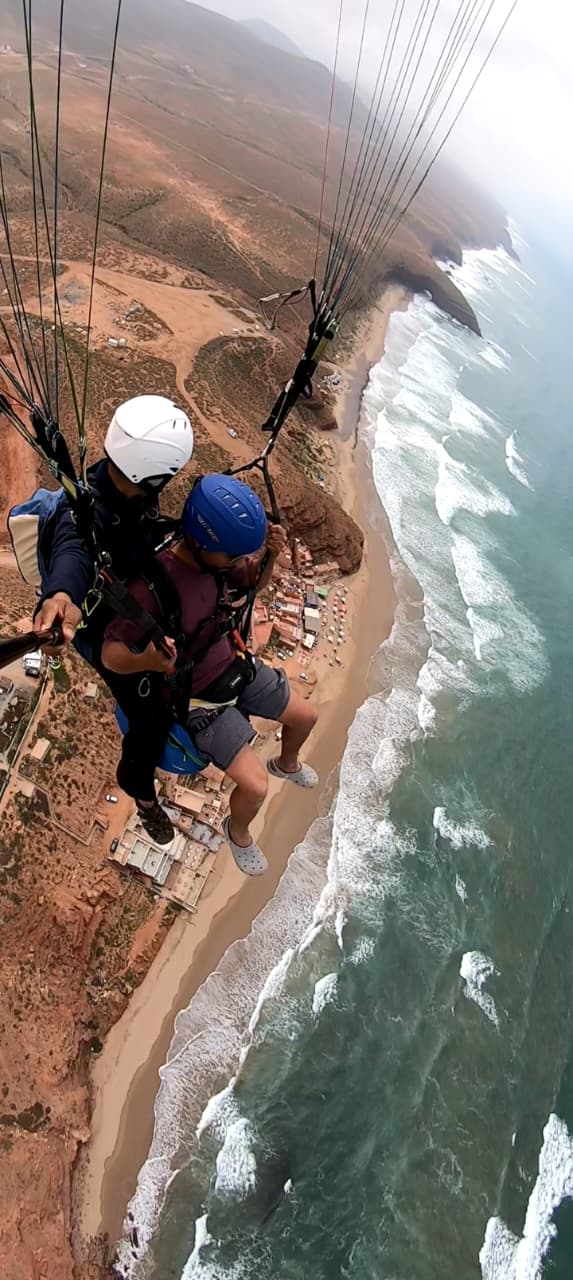
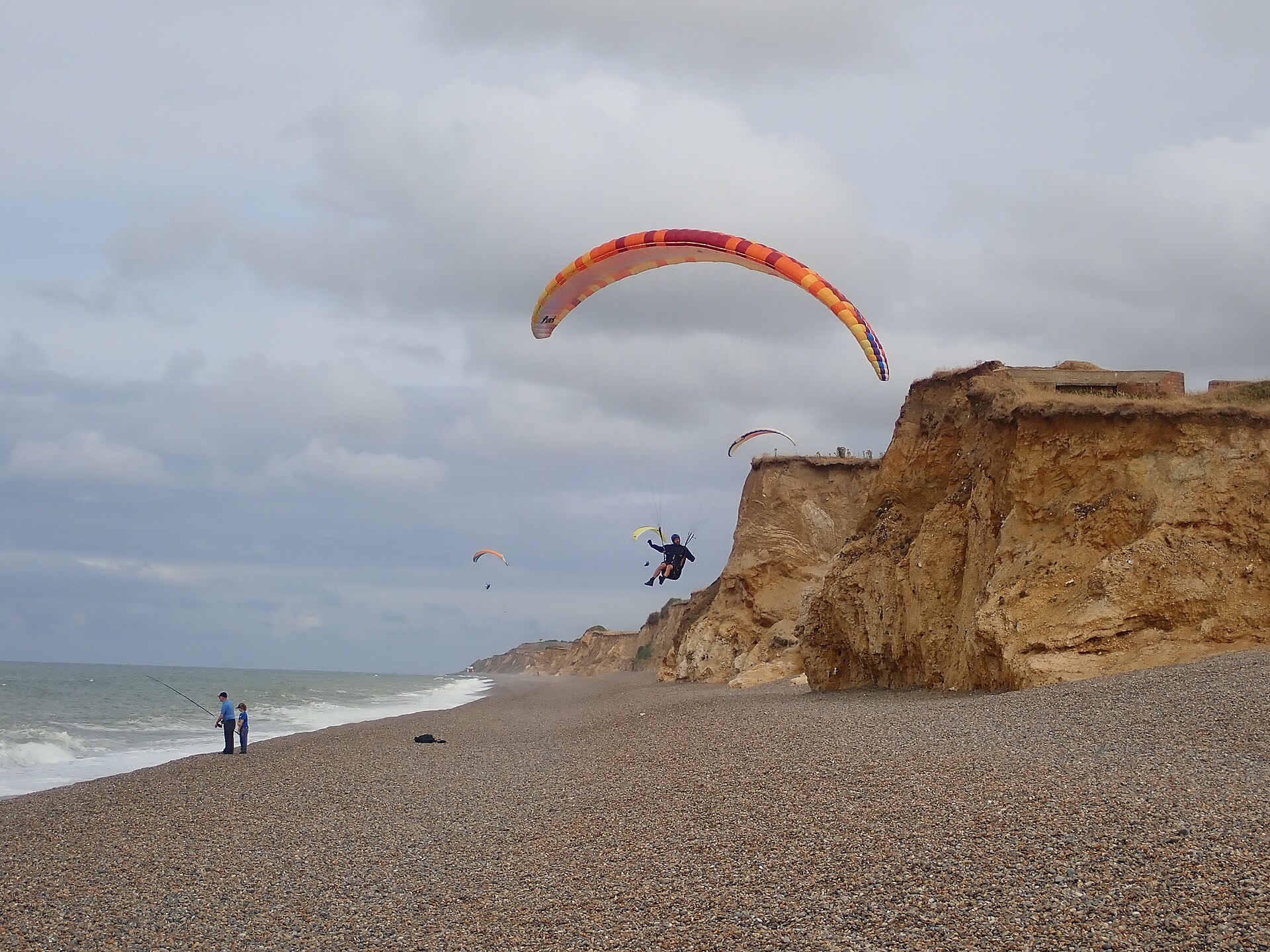
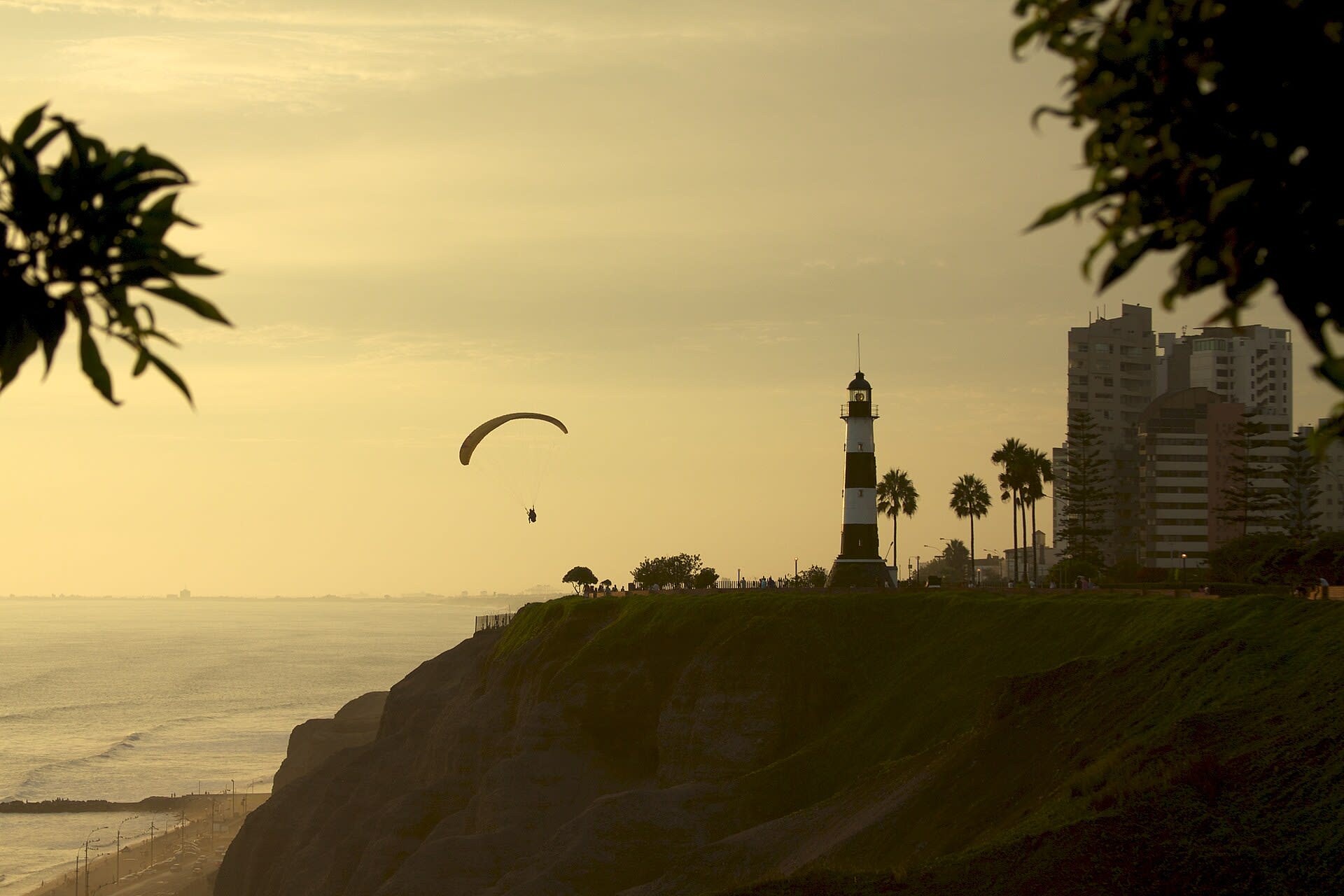
When this sea wind meets a cliff, it has no choice but to rise to get over it. A band of rising air forms just in front of the slope. The pilot places the wing in it and flies along the cliff using that lift: this is ridge soaring, also called dynamic soaring.
This type of flight is particularly pleasant for a passenger: sea air is regular, without the warm, sometimes turbulent thermals found in the mountains. You can stay up for long minutes, fly back and forth along the coast and land gently on the beach. To learn more about our sites, read our article on paragliding at Legzira.
The ideal wind for flying
- Direction: the wind must come from the sea and arrive facing the cliff, or slightly at an angle. On our sites, that mostly means a westerly to north-westerly sector.
- Strength: moderate. Too light and the wing will not stay up; too strong and it struggles to move forward and landing becomes tricky. The pilot judges the wind strength with an anemometer and their experience.
- Regularity: a constant wind is better than a stronger but irregular one. Gusts are the enemy of a comfortable flight.
When don't we fly?
A flight is postponed in the following situations:
- Wind too strong or gusty, often when an Atlantic weather front passes through.
- Offshore wind, blowing from inland towards the ocean, such as the chergui, a hot, dry wind from the east: it creates no lift in front of the cliffs and pushes out to sea.
- Rain or thunderstorms, rare but possible in winter.
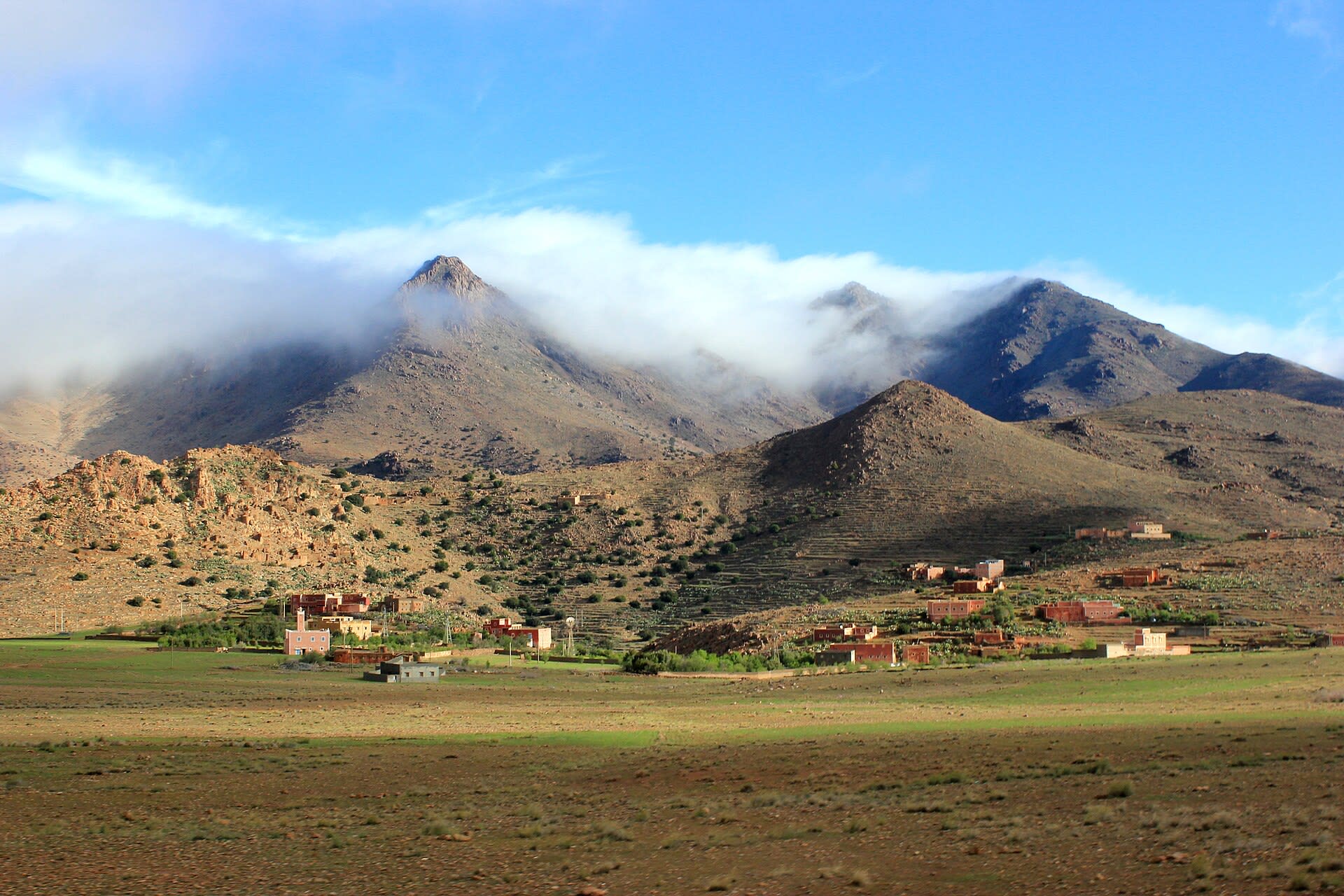
- Thick fog or a cloud base that is too low, which takes away visibility.
- No wind at all, which simply makes it impossible to stay airborne along the slope.
In all these cases, the rule is the same: we wait. Our article is paragliding safe? explains why this caution is the key to safety.
The weather through the seasons
Spring and summer
The breeze is regular and the days are long. On the other hand, morning fog, common on the Atlantic coast, can cover the shoreline until late morning. It usually clears in the early afternoon, so flights are concentrated in the afternoon and evening.
Autumn and winter
The air is often remarkably clear, with views stretching to the Anti-Atlas mountains. Temperatures remain mild. A few Atlantic weather systems can bring strong wind or rain for a day or two, between beautiful flying days. Our guide to the best time to visit Aglou and Legzira details the climate month by month.
How the pilot makes the decision
The day before, the pilot checks the forecast models: wind direction and strength, gusts, cloud cover, risk of rain. On the day, they confirm on the ground: windsock, anemometer, the look of the sea, the behaviour of the birds gliding along the cliffs. Only then do they confirm the slot and choose the best-exposed site of the day.
Our tips as a passenger
- Book at the start of your stay: you will have several opportunities if a postponement is needed.
- Stay reachable: your pilot may bring the meeting time forward or push it back depending on how the wind develops.
- Be flexible: a flight moved by two hours is often a much better flight.
Want to fly as soon as the sky allows? Send your booking request and your pilot will suggest the best slot according to the sea breeze.
Cover photo: Peru - Lima 099 - sunset paragliders (7012750019).jpg by McKay Savage from London, UK, CC BY 2.0, via Wikimedia Commons.
Frequently asked questions
What wind do you need for coastal paragliding?
A wind coming from the sea, facing the cliffs, steady and moderate. Too light and the wing cannot stay up; too strong or gusty and the flight becomes uncomfortable and risky.
Why do you mostly fly in the afternoon?
Because the sea breeze builds up during the day as the land warms. It is usually at its most regular in the afternoon and early evening.
Is a flight postponed for weather lost?
No. It is simply moved to another slot or another day. That is why we recommend booking at the start of your stay.