Surfing in Mirleft and Aglou: Spots, Seasons and Tips for Beginners on the Souss Coast
Waves for every level, a relaxed vibe and wild scenery: where and when to surf between Aglou, Mirleft and Sidi Ifni, and how to get started safely.
Contents
- Why surf on the Souss coast?
- The spots along the coast
- Aglou
- Mirleft
- Sidi Ifni
- Further north
- When to surf
- October to March: the main season
- April to September: the gentle season
- What wetsuit should you wear?
- Learning to surf safely
- Take lessons
- Understand the ocean
- Respect the rules of priority
- Progress step by step
- Surf in the morning, paraglide in the afternoon: the ideal combination
- Practical tips
- In short
Taghazout, north of Agadir, attracts surfers from all over the world. But further south, between Aglou, Mirleft and Sidi Ifni, the Souss coast hides waves that are just as beautiful, wild beaches and a much calmer atmosphere. Whether you are a beginner or an experienced surfer, here is our guide to surfing in Mirleft and Aglou: the spots, the seasons, the gear and the rules for getting started safely.
Why surf on the Souss coast?
- Consistent swells from the North Atlantic, especially from autumn to spring.
- A wide variety of spots: long beaches, coves and rocky points.
- Fewer people than at Morocco's most famous breaks.
- Wild scenery: red cliffs, fishing villages and sunsets over the ocean.
The spots along the coast
Aglou
Aglou's long beach, fifteen minutes from Tiznit, offers an exposed beach break: waves break over sandbanks that shift with the seasons. The spot can be powerful, with noticeable currents. It suits independent surfers, and beginners only on small days and with supervision.
Mirleft
The Mirleft coastline is a succession of bays and points. You will find beach breaks for learning and progressing, and more technical waves over rocky bottoms when the swell picks up. It is the most versatile spot in the area, with a relaxed atmosphere and a few surf schools. Discover the village in our Mirleft travel guide.
Sidi Ifni
Below the blue-and-white town, Sidi Ifni beach offers consistent waves and a friendly vibe. A great option for varying your sessions. Read our Sidi Ifni travel guide.
Further north
Taghazout, Tamraght and the spots around Agadir offer a huge choice of waves and surf schools. They are easy to combine with a stay further south.
When to surf
October to March: the main season
North Atlantic depressions send long, powerful swells. This is the best period for experienced surfers. Beginners should choose small-swell days or the most sheltered spots.
April to September: the gentle season
Swells are smaller, which is ideal for learning. The northerly wind, more frequent in the afternoon, can however chop up the surface of the water: favour morning sessions, when the ocean is often smoother.
What wetsuit should you wear?
The Atlantic stays cool all year round on the Moroccan coast, because of cold water upwelling.
- In winter: a 4/3 mm wetsuit, possibly with booties.
- The rest of the year: a 3/2 mm is usually enough.
Also bring water-resistant sun cream and a rash vest for long sessions.
Learning to surf safely
Take lessons
To start, nothing beats a qualified instructor. They will choose the right spot for the conditions, give you a suitable soft-top board, teach you how to pop up and, above all, how to understand the ocean. A few lessons are enough to catch your first waves.
Understand the ocean
- Rip currents carry the water from the waves back out to sea. If you are caught in one, do not fight it: swim parallel to the beach to get out.
- Tides have a big effect on the waves and on beach access: check before each session.
- Rocks line some spots: spot them before you paddle out.
Respect the rules of priority
The surfer closest to the peak, where the wave starts breaking, has priority. Never drop in on a wave someone is already riding, do not let go of your board and keep away from experienced surfers when you are learning. Respect and a smile open every door in the water.
Progress step by step
Your first sessions are about learning to read the sea as much as standing up. Start in the white water close to the shore, where the broken waves are gentle and predictable. Once you can pop up consistently and steer a little, move on to small unbroken waves with your instructor. Do not rush: progress comes quickly with regular, short sessions rather than one exhausting day.
Surf in the morning, paraglide in the afternoon: the ideal combination
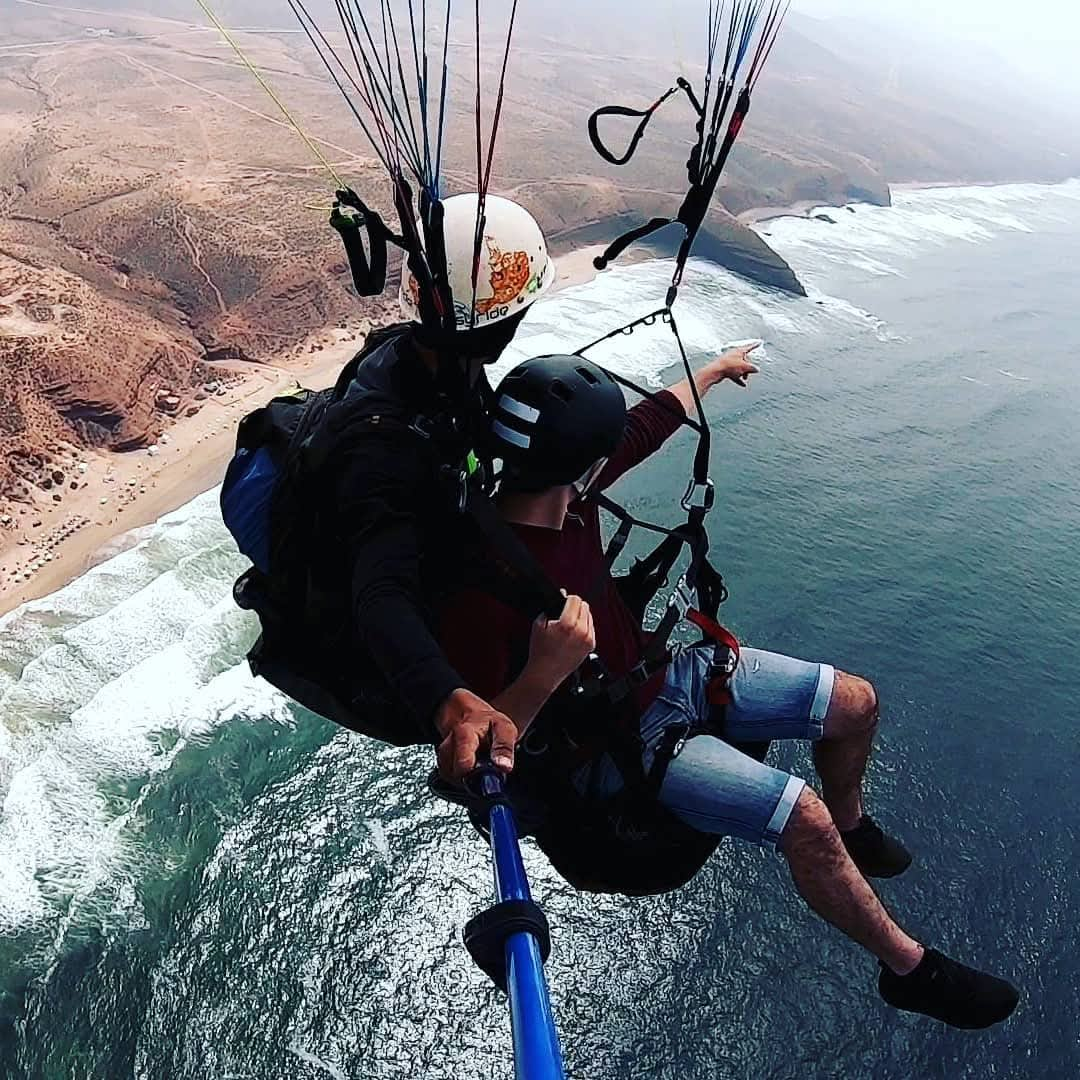
The Souss coast offers a natural complementarity between two sports. In the morning, the sea is often smoother, perfect for surfing. In the afternoon, the sea breeze sets in and blows against the cliffs: the ideal time to go paragliding. After a surf session, discover the coast from the sky on a flight above Aglou or Legzira. To understand this phenomenon, read our article on the sea breeze and paragliding weather.
Practical tips
- Rent or bring your gear: schools offer beginner boards, but the choice is limited away from the big spots.
- Stay hydrated and protect yourself from the sun, even on cloudy days.
- Never surf alone at a spot you do not know.
- Respect local people and fishermen, and take your rubbish with you.
In short
Between Aglou, Mirleft and Sidi Ifni, the Souss coast offers waves for every level, from October to March for big swells and all year round for learning. Take lessons if you are a beginner, respect the ocean and its rules, and enjoy the unique combination of surfing and paragliding. Ready to go from the wave to the sky? Book your paragliding flight and see our guide to adventure activities in southern Morocco.
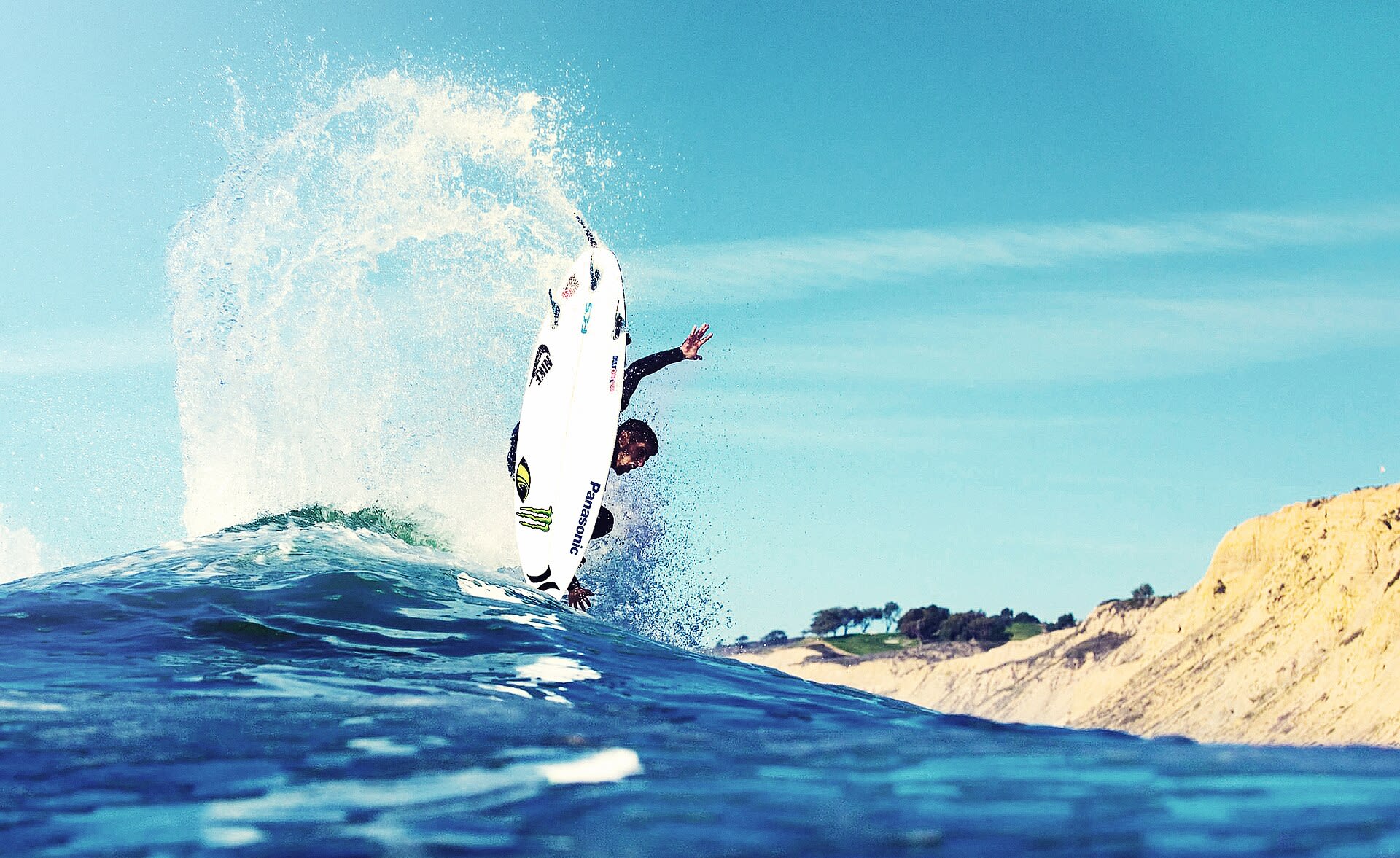
Cover photo: Surfing trickster (Unsplash).jpg by Mohamed Nohassi coopery, CC0, via Wikimedia Commons.
Frequently asked questions
When is the best season for surfing in Mirleft?
From October to March, when North Atlantic swells are most consistent. Beginners can surf all year round by choosing days with a small swell.
What wetsuit do you need to surf in the Souss?
A 4/3 mm wetsuit is recommended in winter and a 3/2 mm is usually enough the rest of the year, as the water stays cool even in summer.
Can you surf in the morning and paraglide in the afternoon?
Yes, it is actually an ideal combination: the sea is often smoother in the morning, and the sea breeze that sets in during the afternoon is perfect for paragliding.